
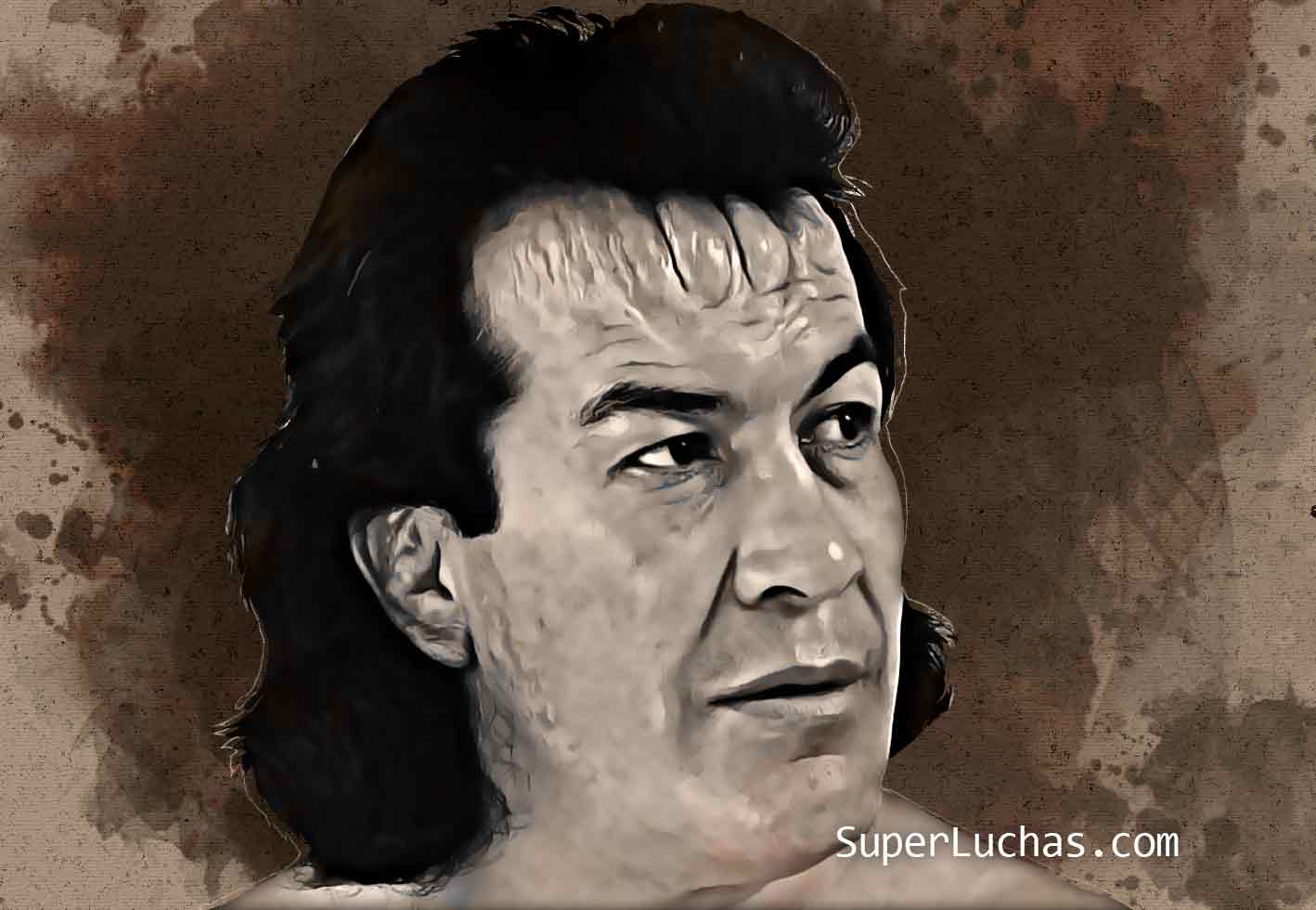
On July 3, 2019, Pedro "Perro" Aguayo died at 73, and with him went one of the most important box office forces lucha libre has ever produced.
That is not empty obituary language. Aguayo was widely regarded as a man who drew more paying fans in Mexico than almost anyone who ever lived. He was not a masked icon in the mold of El Santo, and he did not build his legend on mystery. He did it the hard way, with blood, noise, violence, motion and a style that made every arena feel like it might tip over if the crowd got any louder.
By the time of his death, Aguayo had been battling dementia, and his final years carried an extra layer of heartbreak after the 2015 in-ring death of his son, Perro Aguayo Jr. But the date itself, July 3, belongs to the elder Aguayo's legacy, because it marked the end of a career that stretched from the late 1960s into the 2000s and left fingerprints on nearly every major period of modern Mexican wrestling.
The brawler who turned realism into stardom
Aguayo's great gift was making struggle feel real. He was known for brawling, bleeding and throwing himself into fights with a level of conviction that made polished technique almost beside the point. He did not need to look graceful. He needed to make people believe he would fight until there was nothing left.
That made him a natural heel at first, but it also made him impossible to keep in one lane forever. Fans responded to the sheer force of his performances. Even when he was supposed to be hated, there was a magnetism to the chaos. As he got older, that same intensity helped turn him into one of the most beloved figures in the sport.
His rise accelerated in the mid-1970s. He won the hair of Karloff Lagarde and Carlos Mata in 1974, then Ray Mendoza and Marty Jones in 1975. On July 4, 1975, one day after the anniversary of his death years later, he defeated Ringo Mendoza in a tournament final to win the vacant NWA middleweight title, the first of many major championships.
The real breakthrough came in his 1975 feud with El Santo. Santo was already wrestling's immortal national hero, but he still needed the right opponent for a major singles program. Aguayo was that opponent. Their rivalry ended on October 3, 1975, at the EMLL 42nd anniversary show, where Santo defended his mask by beating Aguayo before a sold out Arena Mexico. Aguayo lost the match that mattered most, but he won something more durable. He left that feud as a made man.
A draw who outgrew promotions
One of the strongest measures of Aguayo's power was that he was too big to be contained by ordinary company lines. In the late 1970s and early 1980s, during the rivalry between EMLL and UWA, he was able to work on top for both promotions. Only a handful of names in wrestling history ever reach that sort of leverage.
At El Toreo in Naucalpan, Aguayo and Canek became the building's defining stars. His title matches and blood feuds routinely pulled huge houses. He also carried his appeal outside the usual boundaries of Mexican wrestling, working regularly in Japan and later helping shape the cross-pollination that made lucha style more influential abroad.
Still, if there was one stretch that best explained who Aguayo was to Mexican fans, it was the Konnan feud. In 1991, Konnan vs. Aguayo drove six consecutive sellouts of 17,760 fans at Arena Mexico, then peaked on March 22 when Aguayo beat Konnan for his mask. A second run of business later that year ended with Konnan getting revenge in a hair match on September 6, but the larger point had already been made. Aguayo was still the emotional center of the feud, still the man the audience paid to see.
That momentum carried directly into the birth of AAA in 1992. Aguayo and Konnan were central to the new promotion's immediate rise, which turned AAA into the country's top company almost overnight. On the original TripleMania show on April 30, 1993, a sellout crowd of 48,000 in Mexico City saw Aguayo beat Mascara Ano 2000 in a hair vs. mask match. A year later, at When Worlds Collide in Los Angeles, he beat Konnan in a bloody cage match on one of the most important lucha shows ever staged in the United States.
Why Perro Aguayo's legacy held for so long
Aguayo mattered because he could survive reinvention without losing his core identity. He moved from rudo to beloved veteran. He shifted from middleweight to heavyweight. He worked with legends, then with a younger generation, then alongside his own son. On June 7, 1998, he and Perro Aguayo Jr. won the Mexican national tag team titles, giving his career a late chapter that felt less like nostalgia and more like continuity.
Even after his body began to wear down from decades on hard rings, he remained a draw. His 2000 and 2001 run back in CMLL produced major business, including hair wins over Cien Caras and Mascara Ano 2000 and a farewell match on March 30, 2001, that became one of the hottest tickets in Arena Mexico history. When he returned again in 2005 to back up his son in another war with the Dinamitas, the old reaction was still there.
That staying power says everything. Fans did not just remember Perro Aguayo. They kept paying to feel what he created.
Lucha libre has had greater technicians, cleaner athletes and more protected myths. It has not had many who could turn a rough brawl into mass emotion the way Aguayo could. July 3 is the date that closed his story, but it also serves as a reminder that Mexican wrestling's biggest stars were not always the smoothest or the safest. Sometimes they were the ones who looked like they were willing to break themselves in front of you, and somehow made that feel heroic.
Perro Aguayo did that for decades. That is why his death was not just the loss of a famous wrestler. It was the end of one of lucha libre's last truly gigantic live attractions.