
On April 13, 1997, ECW stopped feeling like an underground secret and started looking like a national force.
That was the meaning of Barely Legal, the Philadelphia promotion's first pay-per-view, staged at the ECW Arena in front of a fanbase that had spent years believing its outlaw favorite could matter beyond late-night TV, traded tapes and word of mouth. By the end of the night, Terry Funk was the new ECW world champion, the building was in a frenzy, and ECW had pulled off the kind of event that changed how the company was discussed.
The importance of the date went beyond one title switch. ECW had spent most of the 1990s building a reputation as wrestling's rebel brand, louder, bloodier, riskier and less polished than the major promotions. That identity gave it cult power, but pay-per-view was the real line between cult status and national relevance. Getting to that platform mattered. Delivering once it got there mattered even more.
Observer coverage from the time framed the show as something that was both messy and undeniably historic, which feels like the right way to remember it. Barely Legal was not a smooth corporate production. It was nervous, volatile and rough around the edges. That was part of the point. ECW was not trying to look like polished mainstream wrestling. It was trying to show that its own style, with all the danger and unpredictability that came with it, could hold a paying audience's attention for a full major event.
And it did.
Terry Funk became the emotional center of the show. He was already a legend by then, and at an age when most wrestlers from his generation were either retired or reduced to nostalgia appearances, he still looked like he understood exactly how to make a building feel every step of a match. Barely Legal used him perfectly. He first survived a Three-Way Dance against Stevie Richards and The Sandman to earn an immediate title shot, then went straight into the main event against Raven and left with the championship.
That finish mattered because Funk represented more than a title challenger. He connected ECW's anti-establishment present to wrestling's older blood-and-guts traditions. In a promotion that prided itself on being extreme and modern, Funk gave the chaos a sense of lineage. He did not feel dropped in to lend credibility from the outside. He felt like proof that ECW understood something timeless about wrestling violence, emotion and defiance.
Raven, meanwhile, had been central to ECW's identity as its dark, brooding champion. His title reign fit the promotion's atmosphere, but Funk winning on this stage made a bigger statement than Raven retaining would have. ECW was telling viewers that its first pay-per-view was not just a showcase. It was a landmark night, and landmark nights need an ending people remember.
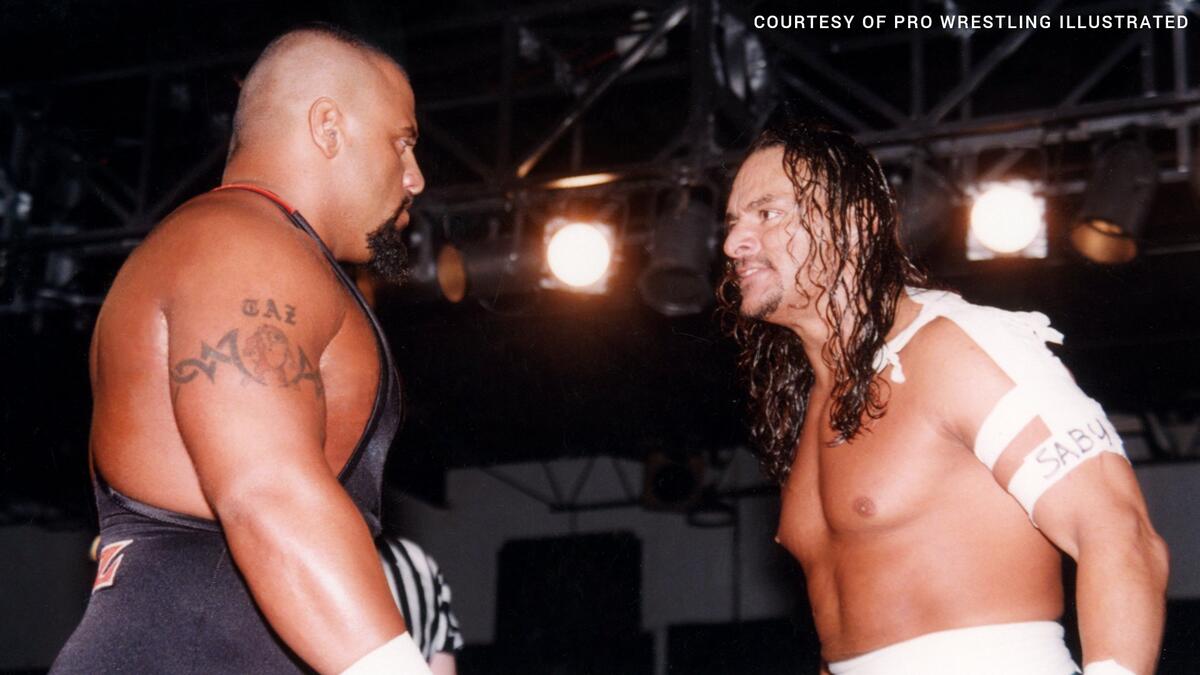
The rest of the card helped reinforce why the company had become so influential in the first place. Sabu versus Taz carried the aura of a true grudge fight, one of those ECW rivalries that felt half wrestling feud and half street-level obsession. Rob Van Dam versus Lance Storm brought a different rhythm, more athletic and controlled, while the six-man match featuring Great Sasuke, Gran Hamada and Masato Yakushiji showed how seriously ECW took international and junior heavyweight talent before that style became standard major promotion fare in the United States.
That range is part of why Barely Legal still holds up as an important date. The old shorthand for ECW usually starts and ends with weapons, blood and crowd chaos. Those elements were real, and they were central to the promotion's appeal, but the deeper story is that ECW had a sharper eye for contrast than it often gets credit for. On one card, it could give you Funk bleeding for a title, Taz and Sabu tearing into each other with hate, and a high-speed six-man match that pushed a completely different idea of what American fans could embrace.
That mattered for the broader wrestling business in 1997. The industry was already changing fast, with audiences responding more strongly to edge, realism and performers who felt less like cartoons. ECW did not create that shift by itself, but it became one of the clearest places where the future was visible before bigger companies fully absorbed it. Barely Legal was the night that vision reached the pay-per-view audience in an undeniable way.
It also mattered that ECW got there without sanding off its identity. The promotion toned some things down just enough to make the show workable for that environment, but the event still felt like ECW. It still felt cramped, tense and volatile. It still felt like anything could spill out of control. For longtime fans, that authenticity was the victory. A sanitized ECW debut would have defeated the purpose.
There is also something fitting about Funk being the man who stood tall when the show ended. ECW was a young promotion, but its first pay-per-view closed with a veteran who understood how to make violence mean something. He did not just win a championship that night. He gave the promotion an ending with emotional weight, the kind of finish that told viewers this was more than an oddball alternative fighting for niche attention.
Looking back, Barely Legal feels like one of those nights where a company reveals the full shape of its influence. ECW did not suddenly become a financial giant because of it, and the promotion's long-term struggles did not disappear. But April 13, 1997 proved that ECW could translate its energy, ideas and fan connection onto the biggest distribution stage it had ever reached.
That is why the date still matters. Barely Legal was not important because it made ECW respectable in the old sense. It was important because it proved ECW never needed to be respectable on anyone else's terms. It could be loud, rough, confrontational and still compelling enough to carry a pay-per-view audience. In 1997, that was a powerful statement.
On this day, ECW's outsider identity stopped being a local phenomenon and became part of wrestling history.