
By the spring of 2000, WCW was already in deep trouble. The company was getting beaten badly in the ratings, creative direction changed by the week, and the world title had started to feel less like the top prize in the sport and more like a prop in a panic. Even in that climate, what happened on April 25, 2000 still felt surreal.
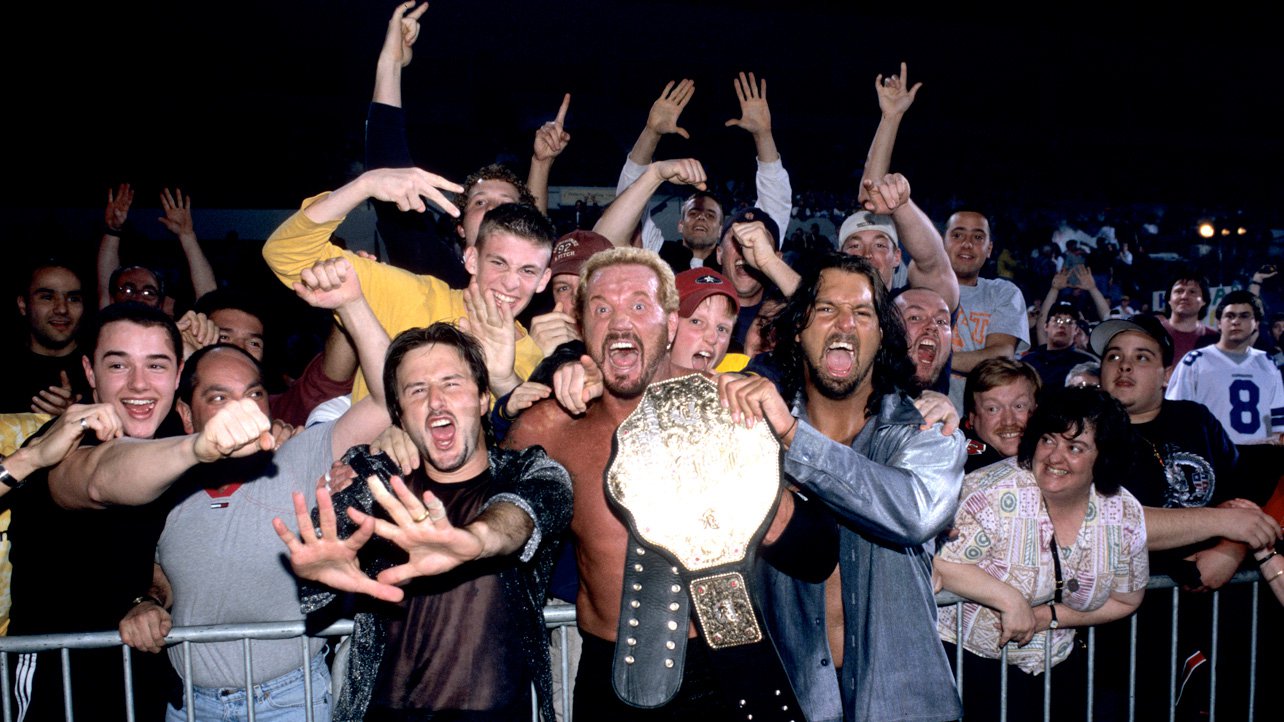
That night in Syracuse, David Arquette left a WCW Thunder taping as world heavyweight champion.
It remains one of the most infamous title changes of the era, not because Arquette was some hated outsider, but because the decision said so much about where WCW was at that moment. A championship that had belonged to Ric Flair, Sting, Vader and Goldberg was suddenly wrapped around a Hollywood actor who had been brought in to help promote *Ready to Rumble*.
How the title changed hands
The setup was pure late-stage WCW chaos. Diamond Dallas Page had beaten Jeff Jarrett on Nitro the night before to take the title, only for the belt to be thrown into a tag match 24 hours later. Page teamed with Arquette against Jarrett and Eric Bischoff, with the stipulation that whoever scored the deciding fall would become champion.
That kind of match construction already told the story. WCW was not treating the belt like the centerpiece of the company. It was treating it like a plot device.
According to the Observer, the finish came with Jarrett pinning Page at the same time Arquette pinned Bischoff. WCW then announced Arquette as the winner and the new champion, with the actor parading around with the belt while the company chased the mainstream attention it hoped the stunt would bring.
On paper, the thinking was obvious enough. Arquette was a recognizable name. He was part of a film tied to the same corporate orbit as WCW. If the promotion could get sports pages or entertainment shows talking, maybe that would mean fresh viewers. In a company desperate for a jolt, somebody convinced themselves that shock value and publicity were the same thing as momentum.
They were not.
Why fans turned on it so fast
What made the angle land so badly was that wrestling fans understood exactly what was being traded away.
A world title can survive a lot. It can survive screwy finishes, short reigns and even bad champions if the audience still believes the promotion respects the belt. Once that respect goes, the damage sticks. Arquette's win hit that nerve immediately because it told viewers the title was no longer sacred inside WCW itself.
The reaction was also shaped by timing. This was not a healthy company trying one goofy crossover. This was a promotion already bleeding credibility in real time. Nitro and Thunder were full of swerves, worked shoot language and title changes designed to create headlines. Instead of feeling hot, the shows often felt unstable. Arquette winning the belt became the clearest symbol of that instability.
The irony is that Arquette himself was never really the villain of the story. He was a lifelong wrestling fan, and later it became clear that he understood how awkward the whole thing was. Fans did not reject the moment because they thought he was personally trying to hijack the business. They rejected it because WCW management was willing to put its most important championship in the service of a publicity stunt.
That distinction matters. When people remember this period, they are usually not laughing at Arquette as much as they are shaking their heads at WCW.
What the moment came to represent for WCW
Arquette's title win did not kill WCW by itself. The company had deeper problems than one angle, and those problems were already visible long before April 25. But the moment became a perfect shorthand for the larger collapse.
It captured the promotion's worst instincts in one scene. There was the belief that a famous face from outside wrestling could fix a product issue. There was the urge to hot-shot the title instead of rebuilding it. And there was the failure to understand that attention is not always the same as interest, especially when the attention comes with ridicule attached.
That is why the title change has lived on for so long. Fans remember plenty of bad booking ideas, but only a few become cultural shorthand. Arquette winning the belt joined that list because it felt like a line had been crossed. Even people who had already grown numb to WCW nonsense could point to that night and say the company had lost sight of what its own championship meant.
There was also something grimly revealing about the choice of champion. Page, Jarrett and Bischoff were all deeply tied to WCW's on-screen power struggles at the time, so the promotion solved one layer of chaos by adding another. Instead of stabilizing the picture around a wrestler, it made the belt part of a celebrity cameo. That may have created buzz for a day, but it made the title feel smaller.
Twenty-five years later, that is the real legacy of April 25, 2000. Not just that David Arquette won the WCW world title, but that the win froze a whole era in place. If you need one image to explain how far WCW had drifted from its peak, Arquette holding Big Gold is near the top of the list.
Also on this date
April 25 has shown up in wrestling history in very different ways. In 1992, All Japan Women ran Wrestlemarinpiad at Yokohama Bunka Gym, its biggest show of that year. In 1999, Steve Austin and The Rock headlined WWF Backlash in Providence as the company surged in the opposite direction from WCW's slide.
That contrast is part of what makes the Arquette title win linger. It was not merely weird. It landed at a time when the rest of the industry was showing, in different ways, what a hot promotion and a meaningful main event were supposed to look like.