
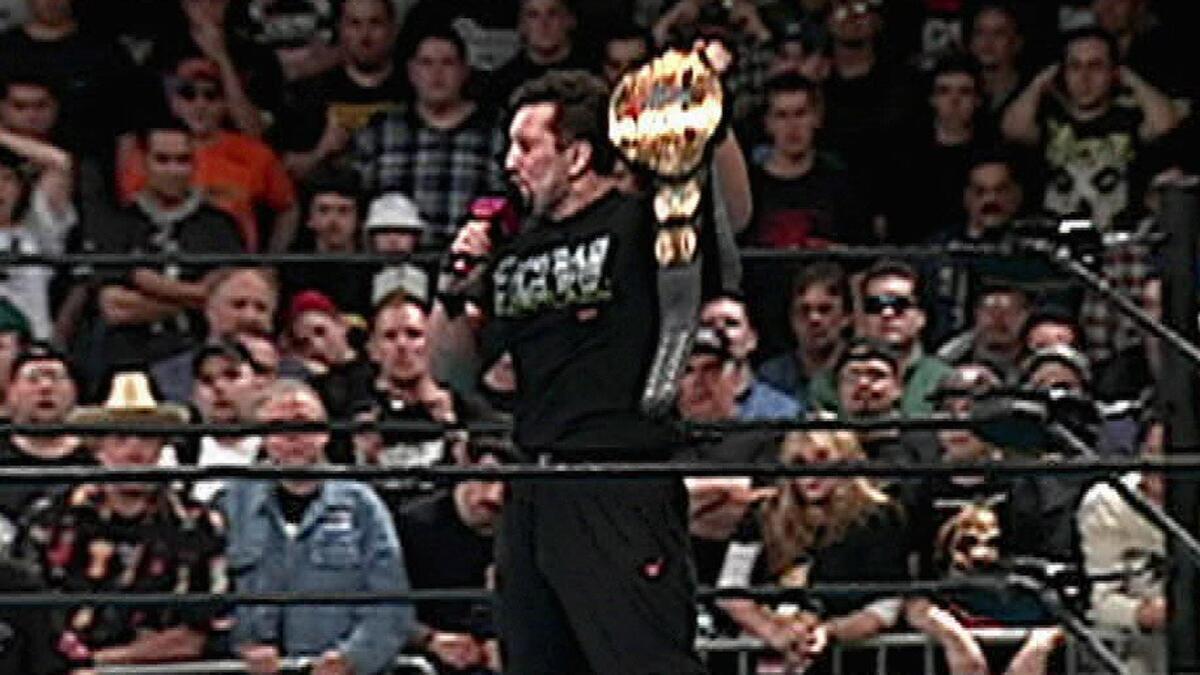
On April 22, 2000, Tommy Dreamer finally got the moment ECW fans had spent years waiting to see. In the main event of CyberSlam at the ECW Arena in Philadelphia, he beat Tazz and won the ECW World Heavyweight Championship for the first time.
And then, almost before the building could fully process it, the moment was gone.
Justin Credible hit the ring, the celebration curdled into another challenge, and Dreamer's long-awaited coronation turned into one of the most bittersweet title reigns wrestling has ever produced. He held the belt for minutes, not months. Yet that is exactly why April 22, 2000 still stands out. It was not just the night Dreamer finally won the big one. It was the night ECW revealed, in the most dramatic way possible, what the promotion had become by the spring of 2000, emotionally powerful, creatively fearless, and hanging on by improvisation.
Dreamer had been central to ECW for years without being treated as the untouchable ace. He was the promotion's beating heart, the guy who could absorb punishment, keep coming back and make the audience believe that suffering actually meant something. He had survived the Raven feud, carried himself like a company lifer and become the kind of wrestler fans wanted to see rewarded even if the reward never seemed to come.
That history is what made the CyberSlam main event feel so loaded. Tazz was not just defending the title against another challenger. He was walking into the ECW Arena as a man who had already left for the WWF, carrying a championship that had become tangled in one of the strangest power struggles of the era. Dreamer, by contrast, still felt inseparable from the letters on the ring apron. If you were booking a purely emotional payoff, there was almost nobody else the audience would have chosen.
When Dreamer finally pinned Tazz with a sunset flip, the scene landed exactly the way ECW wanted it to. The crowd got its catharsis. Tazz handing over the belt gave the win even more weight because it made the title feel as if it had truly come home. For a brief moment, the company had the perfect ending, its most loyal soldier finally standing on top in the building where his legend had been built.
But ECW in 2000 rarely allowed itself a clean ending.
Justin Credible immediately stepped in and challenged the exhausted new champion. Dreamer accepted, because of course he did. That was always the essential Dreamer trait. He was too stubborn, too proud and too wired to the emotional temperature of the room to protect the moment. He kept fighting when a more calculating champion would have walked away. In storyline, it was reckless. In character, it was completely faithful to who he had always been.
The swerve that followed made the whole night unforgettable. Francine, who had stayed at ringside, turned on Dreamer at exactly the wrong moment. Credible capitalized, pinned him and walked out as champion. Dreamer's dream had come true only long enough for everyone to understand what it meant before ECW yanked it away.
That twist can still split opinion. Some fans loved the cruelty of it because it was so pure to ECW's sensibility. Others have always wished Dreamer had been allowed to breathe with the title for longer, even if only for a few months. But that tension is part of what gives the date its weight. The company found a way to pay off years of audience investment while also refusing to become sentimental for too long.
The deeper story, though, was bigger than one heel turn or one abrupt title switch. The May 1, 2000 Wrestling Observer Newsletter laid out just how unstable the championship scene had become by then. Mike Awesome had jumped to WCW while still ECW champion, forcing emergency legal and booking maneuvers. Tazz, now under WWF contract, was brought back into the title picture as part of the scramble to get the belt off Awesome and restore some sense of order. Justin Credible, meanwhile, had long been penciled in as a major champion once the company felt the time was right. What happened at CyberSlam was not a neat master plan finally clicking into place. It was Paul Heyman trying to turn chaos into compelling television and, somehow, succeeding.
That is why Dreamer's fleeting reign matters beyond the sadness of the moment itself. It captured the contradiction at the center of late ECW. This was a promotion that could still produce a scene powerful enough to make fans feel they had witnessed something historic, but it was also a promotion making decisions inside constant instability. Money was tight, talent movement was relentless and the larger wrestling war kept pulling ECW into battles it could not fully control. Dreamer's win felt like an emotional reward. His immediate loss felt like the business reality crashing through the celebration.
There is also something fitting about the man who embodied ECW's toughness getting a title win that was all endurance and no comfort. Dreamer did not receive the tidy, months-long reward arc that fans usually picture when they talk about the lovable underdog finally making it. He got something harsher and, in a strange way, more memorable. He got one incandescent burst of payoff, then another scar to carry.
That ending also did important work for Credible. He had the arrogance, the presentation and the sense of opportunism that fit ECW's mood at the time. Making him the man who stole Dreamer's perfect night gave his reign an edge it would not have had if he had simply won the title in a standard match under standard circumstances. He was not just champion. He was the thief of one of the promotion's most emotional moments.
More than a quarter century later, CyberSlam 2000 still holds up because it managed to feel honest to everybody involved. Dreamer got the audience's love. Credible got the heat. Tazz got to pass the belt along in front of the people who mattered most to his ECW story. And ECW, for one more night, looked like the only company in wrestling that would dare turn its happiest scene into a knife twist.
That is why April 22, 2000 remains worth remembering. Tommy Dreamer finally won the ECW title that night, and the victory was real. So was the loss that followed. Put together, they became something bigger than either result on its own, a perfect snapshot of ECW at its most emotional, its most chaotic and its most unforgettable.