
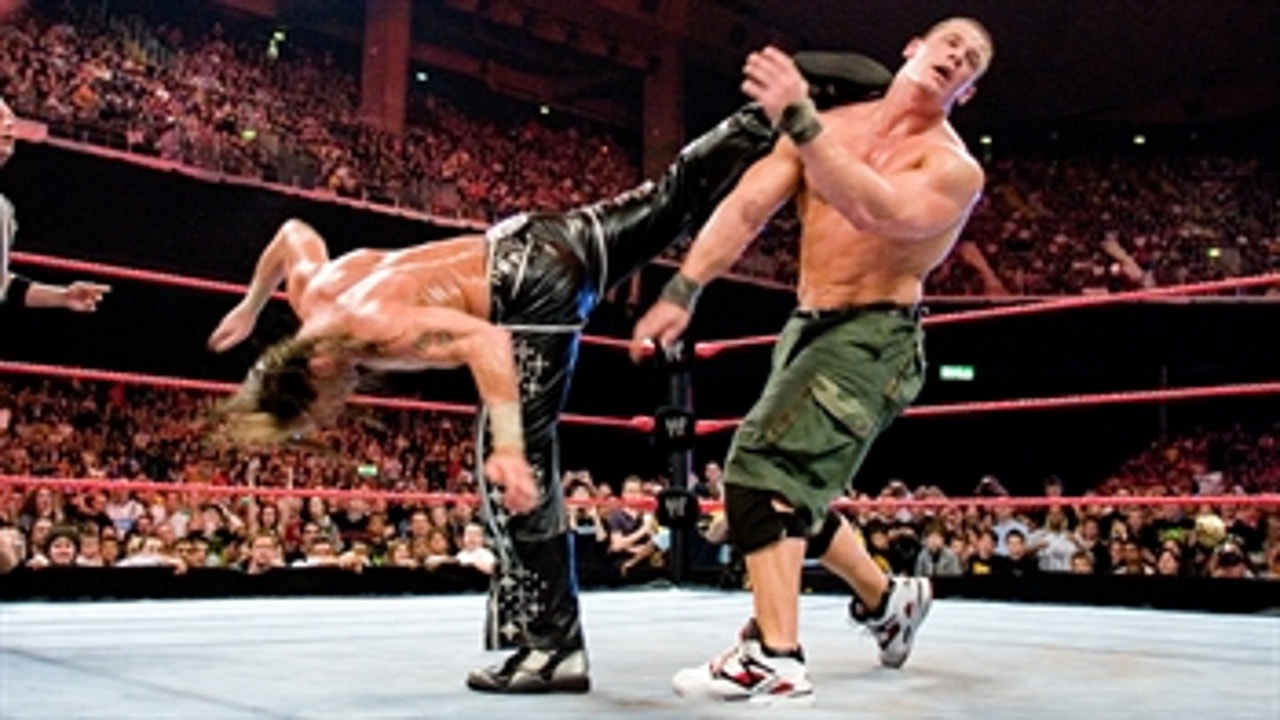
On April 23, 2007, WWE gave away something television almost never gives away on purpose, time.
Not a rushed main event designed to hit a final commercial break. Not a trimmed down television version of a pay-per-view match. Not a segment built around interference, a swerve, or a cliffhanger. In London at Earl's Court, Shawn Michaels and John Cena were sent out for a non-title WrestleMania 23 rematch and stayed there long enough to make Raw feel less like weekly TV and more like a special event unfolding in real time.
By the end of the night, Michaels had pinned Cena after 55 minutes and 45 seconds. Contemporary Observer coverage called it one of the longest television matches in WWE history, and that remains the easiest way to understand why the date still stands out. WWE had plenty of great TV matches before that night and plenty after. Very few were trusted with that much space, that much patience, and that much responsibility.
That is what made April 23 matter.
The match was compelling on the most basic level because the timing was right. Cena had beaten Michaels at WrestleMania 23 earlier that month and was still in the middle of his most divisive years as the face of the company. Michaels, by that stage, was already deep into his second act, no longer the reckless young star of the 1990s but a polished, master-level main event wrestler who understood exactly how to control tempo, emotion, and crowd investment. Putting them back in the ring together was already attractive. Letting them go nearly an hour changed the assignment entirely.
Instead of trying to top WrestleMania with spectacle, they did it with escalation.
The match built in layers. Michaels leaned into his strengths as the veteran craftsman, forcing exchanges to breathe and making every shift in momentum feel earned. Cena, who had spent years being doubted by fans who saw charisma and star power but questioned his in-ring ceiling, met him there and stayed there. That part matters historically. There had been big Cena performances before, but this match became one of the clearest examples that he could thrive in a long, demanding, old-school main event structure when given the chance.
It also helped that the London crowd understood the assignment immediately. International WWE audiences in that era often brought a different energy, louder, less self-conscious, more openly invested in the idea that a television taping could feel major. Earl's Court gave the match that kind of atmosphere from the start. The building did not treat it like a routine stop on the schedule. It treated it like an occasion, and the wrestlers responded accordingly.
That reaction is a big part of why the bout aged so well. Many long matches are remembered for endurance more than quality. This one is remembered because it kept finding new gears without losing the crowd. Michaels and Cena did not just go long. They filled the time with enough urgency that the length became the point rather than the problem. By the time the finish came, the pin felt like a payoff instead of a mercy.
There is a broader WWE story inside that finish too.
Michaels winning did not undercut Cena's standing. If anything, it sharpened the rivalry by reminding viewers that Cena was not an untouchable superhero and that Michaels was still dangerous enough to beat anyone on the right night. For a company that often protected its top champion by avoiding clean television losses, that was a meaningful choice. Cena lost, but he lost in a performance that strengthened his credibility. Michaels won, but the result felt like a continuation of a main-event program rather than a nostalgic exception for a legend.
That balance was hard to pull off, and it is one reason the match still gets brought up whenever people talk about the best Raw main events ever. WWE television is usually built around compression. Segments are short. Stories move fast. Matches often exist to serve the next talking point. On this night, the company briefly embraced a different philosophy, trust two major stars, trust the audience, and trust that sustained in-ring work could carry the show.
The decision said something important about Michaels as well. By 2007, he had become one of the safest bets in wrestling whenever a company needed a big match to feel big. He could still deliver the dramatic flourishes people expected from Shawn Michaels, but he was even more valuable as a ring general who could guide structure, pacing, and crowd emotion over a long stretch. This match is one of the best late-career examples of that version of Michaels, less about wild chaos, more about control.
For Cena, the night remains one of the most useful snapshots of why his legacy became larger than the arguments around him. The Cena discourse of the 2000s was often exhausting. Fans either embraced him as the company's standard-bearer or pushed back hard against the way he was presented. What the London Raw match did was cut through some of that noise. It gave viewers an almost unfairly clear look at what he could do when placed in a demanding spot with a top opponent and asked to carry the emotional weight, not just the branding weight, of a main event.
That is why the date still holds up even without a title change or a shocking angle attached to it. April 23, 2007 matters because it captured two stars at exactly the right intersection of reputation and opportunity. Michaels was the established master. Cena was the still-disputed ace. The match let each man answer the conversation around him in a different way.
It also serves as a reminder of how rare true television classics can be. Pay-per-view history is full of matches designed to be remembered. Weekly wrestling television usually works differently. It is about momentum, promotion, and getting viewers to next week. This was one of those unusual nights when TV stopped thinking like TV. Raw became a stage for endurance, rhythm, and main-event craft, and two of WWE's biggest names rewarded that gamble.
On this day, Shawn Michaels and John Cena did not just have a great television match. They showed how much bigger wrestling TV can feel when a company is willing to let greatness take its time.