
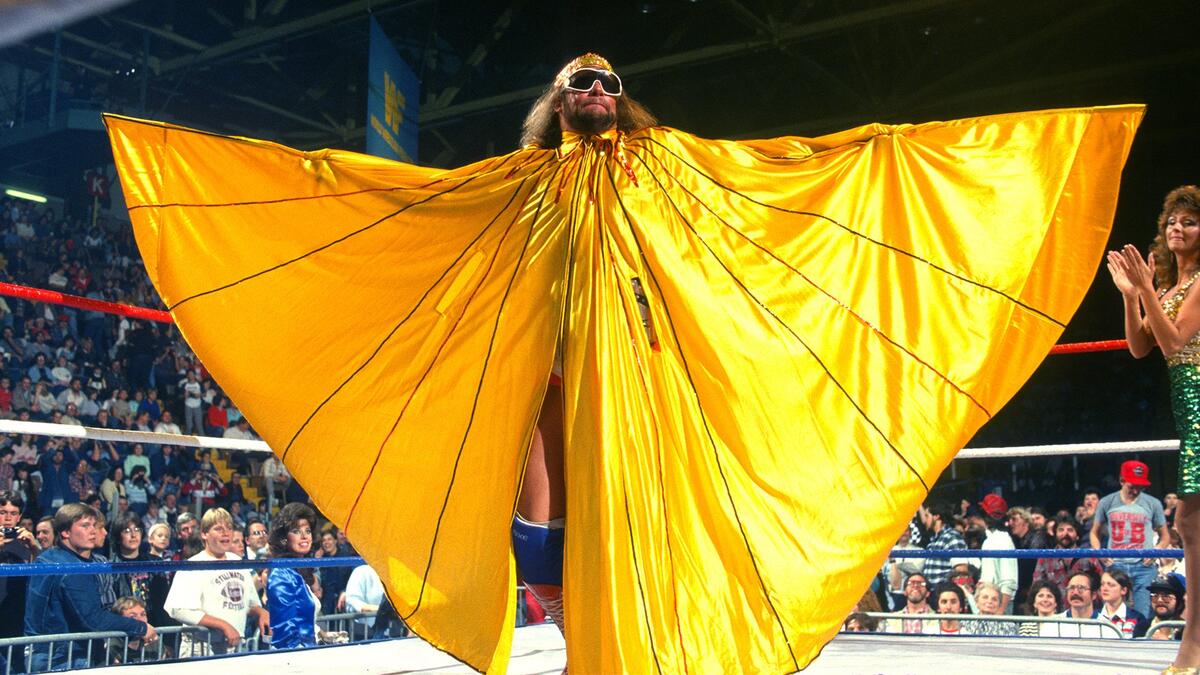
On May 20, 2011, wrestling lost one of the few stars who never needed a surname, a title belt or even a proper introduction. Randy Savage was simply the Macho Man, and by the time the news broke that morning, he had already moved beyond the usual borders of wrestling fame.
Savage died at 58 after suffering what police described as a medical event while driving in Seminole, Florida. His Jeep crossed a median and struck a tree. His wife, Lynn, survived with minor injuries. The raw facts were awful enough on their own. What made the day feel even heavier was how suddenly it all happened. Savage had been out of the weekly wrestling spotlight for years, which somehow made him feel permanent. Then, in an instant, he was gone.
In the days that followed, the Wrestling Observer Newsletter noted that the mainstream attention was enormous, with major outlets treating the story as more than just another celebrity obituary. That part mattered because it captured what Savage had become. He was not only a former world champion or an old pay-per-view headliner. He was one of the handful of wrestlers whose voice, look and personality had escaped the business and entered pop culture for good.
Why the shock hit so hard
A lot of famous wrestlers are remembered for one era. Savage felt bigger than that because he seemed to represent the whole emotional range of wrestling at once.
He could be a genius in the ring, the obsessive craftsman who turned every motion into something sharp and urgent. He could also be wrestling's loudest cartoon, exploding through interviews with that unmistakable rasp, the wild eyes, the tassels, the madness and complete control somehow living in the same performance. Fans who knew him from the WWF remembered the grandeur of the entrance, "Pomp and Circumstance," and the sense that every match came with genuine danger. Fans outside wrestling often knew him from Slim Jim commercials, where he became the rare wrestler who could sell a product without toning down what made him weird.
That is why his death landed differently. People were not only mourning a retired star. They were mourning a piece of the sound and color of late 1980s and early 1990s wrestling itself.
There was also something especially cruel in the timing. Savage had married Lynn, his teenage sweetheart from long before national fame, just days earlier after the two had reconnected later in life. For a figure whose public story had always seemed larger than life, that detail made the news feel painfully human.
The body of work that made him immortal
Savage's reputation was never built on one catchphrase or one rivalry, even if he had plenty of both. It was built on a run of work that touched almost every part of American wrestling memory.
He arrived in WWF in 1985 and immediately felt important. Miss Elizabeth gave the act elegance. Savage supplied the paranoia, the vanity and the intensity. When he beat Tito Santana for the Intercontinental Championship, the title felt like it belonged to a future main eventer, not just a strong hand underneath the top feud.
Then came WrestleMania III.
Hulk Hogan versus Andre the Giant was the headline and always will be, but Savage against Ricky Steamboat for the Intercontinental title became the match people kept replaying, the one that helped define what a classic WWF match could look like. It was fast, precise and packed with the kind of detail that made Savage stand out from almost everyone around him. Plenty of wrestlers had bigger bodies or louder pushes. Very few were as exact.
A year later, he won the WWF Championship at WrestleMania IV, and then came the story that may be the emotional center of his whole career: the rise and collapse of the Mega Powers. Savage and Hogan were enormous together because the team was built on tension from the start. Savage's jealousy, Elizabeth's presence and Hogan's larger-than-life hero act made the breakup feel inevitable. When they finally met at WrestleMania V, it felt less like a normal title program and more like a national wrestling event.
Even later, when his career entered stranger territory, Savage still found ways to leave unforgettable images behind. His reunion with Elizabeth after the retirement match against Ultimate Warrior at WrestleMania VII remains one of the most emotional scenes WWF ever produced. In WCW, he became part of another boom period and proved that his charisma could survive a total change in environment.
That range is the reason Savage's legacy has held so firmly. He was not just one company's star and not just one era's icon. He was a bridge between wrestling's old territorial excess, the national expansion years, and the more self-aware television boom that followed.
Why May 20 still feels personal
When wrestlers die young, there is often a temptation to turn them into symbols and forget the craft that made them matter in the first place. Savage resists that. His performances are too specific, too alive, too strange to be reduced to nostalgia alone.
Watch the Steamboat match and you see the discipline. Watch the Mega Powers split and you see his sense of drama. Watch almost any promo and you see a man who understood that wrestling language should sound like it came from nowhere else on earth. He was theatrical without becoming flimsy. He was intense without looking forced. He made excess feel believable.
That is why so many fans still talk about him with a kind of personal ownership. Everyone seems to have their own version of Randy Savage. Maybe it is the Intercontinental champion circling the ring in sunglasses and sequins. Maybe it is the world champion celebrating with Elizabeth. Maybe it is the Slim Jim pitchman, the "Bonesaw" cameo, the voice that every wrestling fan eventually tried and failed to imitate.
On May 20, 2011, all of those versions came rushing back at once. The shock was not only that Randy Savage had died. It was that a figure who had felt so permanent suddenly became memory.
More than a decade later, that is still the lasting sting of the day. Wrestling lost one of its greatest performers. Popular culture lost one of its most unmistakable characters. And for anyone who grew up hearing that voice and believing nobody could ever quite burn as bright, May 20 remains one of those dates that still does not look right when you read it.