
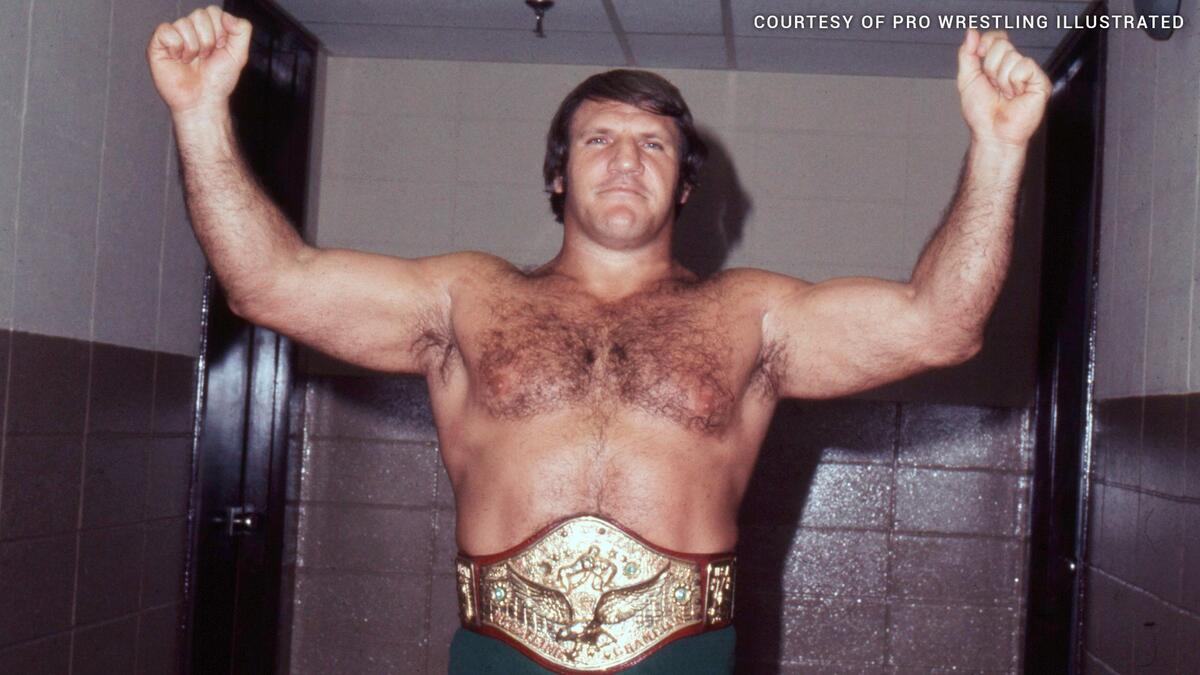
On April 18, 2018, Bruno Sammartino died at 82, and wrestling lost one of the few figures who still felt larger than the industry that made him famous.
That can sound like obituary inflation, but with Sammartino it is hard to overstate the scale. He was not just a champion from another era or an old headline from the black-and-white years. He was the emotional center of a wrestling culture that once ran through Madison Square Garden and outward into immigrant neighborhoods, union households and family living rooms across the Northeast. For a huge part of the audience, Bruno was not simply the top babyface. He was the standard for what a wrestling hero was supposed to look like.
His death mattered that way because his career had never really turned into distant mythology. Fans still talked about the first title reign, the impossible length of it, the Garden sellouts, the silence when Ivan Koloff finally beat him, the deep bond he had with Pittsburgh and with Italian American fans who saw something of themselves in him. Even in an industry that often rushes toward the next version of itself, Sammartino remained a fixed point.
The life behind that image gave the legend its weight. Born in Pizzoferrato, Italy, Sammartino survived wartime privation as a child while his family hid in the mountains during the Nazi occupation. He later spoke often about hunger, illness and his mother's role in keeping the family alive. By the time he came to the United States and reunited with his father in Pittsburgh, he was physically frail. The wrestling story that followed only makes sense when placed next to that beginning. Sammartino did not become a symbol of strength because it looked good on a poster. He built himself into one because weakness and fear had defined too much of his earliest life.
That history helps explain why his physical reputation always carried a little more substance than the normal strongman hype. Before he became wrestling's most dependable attraction, he was known as an extraordinary lifter, with a bench press that became part of wrestling folklore. Strength was not some cosmetic layer added onto the gimmick. It was the core of how he saw himself.
Once he broke through as a pro, the rest of the business had to adjust around him. Sammartino defeated Buddy Rogers in 48 seconds to win the WWWF championship in May 1963, and the numbers that followed still look unreal. His first reign lasted 2,803 days, the longest recognized men's world title reign in major wrestling history. He later added a second reign of 1,237 days. Those are statistics people know, but the numbers only tell part of the story. What they really describe is trust. Promoters trusted him to carry the company. Fans trusted him to embody the promotion. Year after year, he was the man the territory could build around without apology or panic.
That is where Madison Square Garden becomes central to understanding him. Plenty of wrestlers have had famous title reigns. Far fewer have come to represent a building, a city and a whole period of business the way Sammartino did. He was the heroic constant of the Garden territory, the star around whom villains could be rotated and generations of fans could be organized. When older fans say Bruno was wrestling in New York before it became a national television juggernaut, they are not just making a historical note. They are describing a time when one man could make a regional promotion feel permanent.
He also mattered because he never fully blended into wrestling's later self-image. After retiring from full-time wrestling, Sammartino became one of the industry's loudest critics of steroid culture, cartoon excess and the moral compromises he believed had damaged the business. That estrangement kept him away from WWE for decades, which only added to the feeling that he belonged to a different moral universe than the one that followed him. He was not bitter just for the sake of it. He genuinely believed wrestling had lost something.
That is why his reconciliation with WWE in 2013 meant more than a standard Hall of Fame weekend photo op. When he finally agreed to go in, it felt like a bridge had been rebuilt between the territorial past and the corporate present. The Observer's coverage of his death noted how unlikely that peace once seemed after 26 years of distance from the company he had once carried. By the end, newer fans could at least place a living face with the history they had heard about for years. Old fans, meanwhile, got to see the company publicly acknowledge a man who had been foundational to its rise.
The sadness of April 18, 2018 sat in that overlap. Sammartino had been hospitalized in Pittsburgh for about two months before his death, and much of that struggle had been kept quiet. When news finally broke, the reaction had a different feel from the usual rush of wrestling tributes. This was not just nostalgia talking. It was the recognition that one of the last direct links to wrestling's territorial idea of heroism was gone.
That idea is worth pausing on. Sammartino was not a rebel antihero, not a cool heel, not a television invention built around catchphrases and merchandise cycles. He was an old-school ethnic babyface who won because the crowd believed his honesty, his toughness and his sense of duty. He worked a punishing schedule, fought through injuries and carried himself in a way that made fans feel they were backing a man, not just a character. Wrestling has produced bigger pop culture icons and flashier national stars. It has not produced many figures who felt as trustworthy.
That is why the date still matters. Bruno Sammartino's death did not simply close a notable career. It closed a living chapter of wrestling history, one that stretched from wartime survival in Italy to sold-out nights at the Garden to a late-life reconciliation with the company that became WWE. His records remain staggering, but his real legacy sits somewhere deeper than the record book. He made championship wrestling feel honorable, serious and rooted in the people buying the tickets.
And once that kind of figure is gone, the business does not really replace him. It just keeps telling stories in the shadow he left behind.