
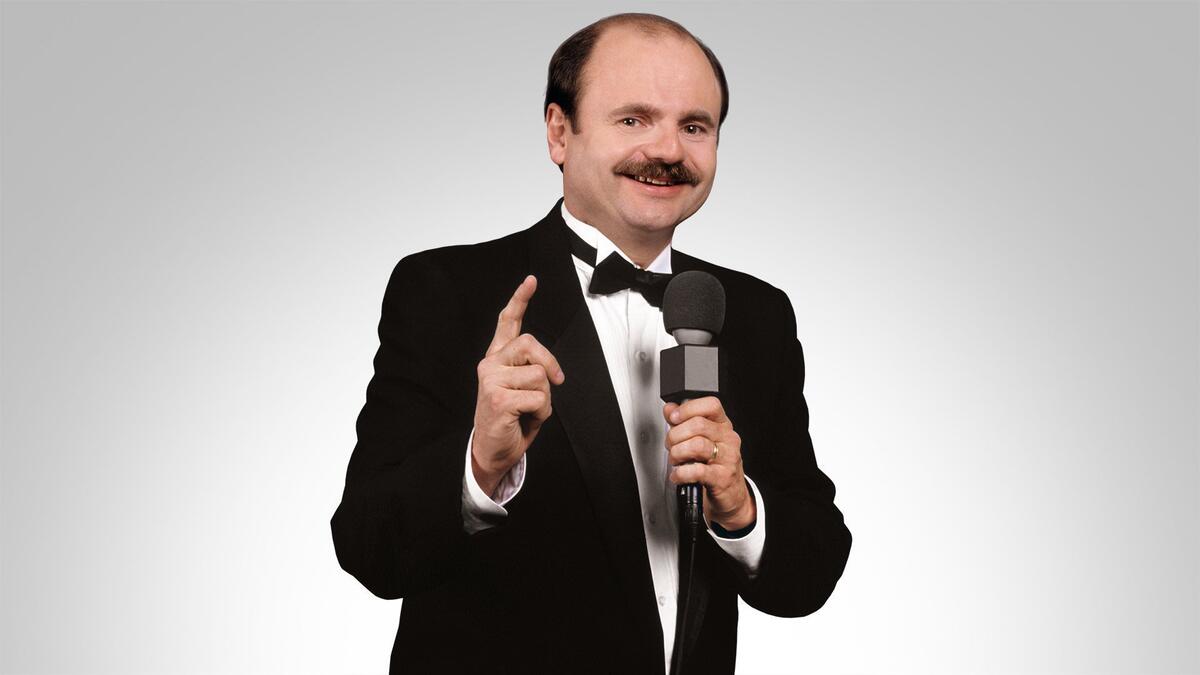
On April 16, 2020, wrestling lost one of the few voices that could make an arena feel bigger before a punch had even been thrown. Howard Finkel died at 69 that day, ending a career that stretched from the Madison Square Garden territory years through the national expansion boom and deep into the modern era. For a lot of fans, he was not just a ring announcer. He was the sound of the big fight feeling official.
That is an unusual kind of legacy in wrestling, because announcers are supposed to frame the stars, not become stars in their own right. Finkel managed both. He had the booming projection, the timing and the instinct to turn an introduction into part of the show itself. When he leaned into the final syllables of a champion's name or stretched out the words "and new," it did more than wake up the crowd. It gave the moment weight. A title change sounded bigger because Howard Finkel was there to tell you it mattered.
Contemporary Observer coverage of his death treated him as one of the two greatest ring announcers American pro wrestling ever produced, and that feels right. Finkel was not remembered that way out of sentiment. He earned it over decades. He was the in-ring voice for the WWF's biggest matches from the late 1970s into the early 2000s, which means his calls are woven into the memory of multiple wrestling booms. Bruno Sammartino, Hulk Hogan, Randy Savage, Bret Hart, Shawn Michaels, Steve Austin, The Undertaker, all of them passed through that soundscape.
What made Finkel special was that he understood ring announcing as performance without turning it into self-indulgence. He never stepped on the wrestlers. He elevated them. In the pre-entrance music era, that mattered even more. His delivery could tell the crowd who was important before the bell ever rang. A babyface felt grander, a heel felt more dangerous, and a title match felt like a genuine event because the man with the microphone sounded like he believed every word.
His path into the business always sounded like the sort of story that only old wrestling can produce. Finkel was born in Newark, New Jersey, and first connected with the McMahon family while working as an usher at the New Haven Coliseum in 1975. He soon moved deeper into the company, and by 1977 he was handling Madison Square Garden ring announcing duties. That was a serious proving ground. Garden wrestling was not some developmental outpost. It was the center of the territory, the place where cadence, confidence and poise really counted.
By the time the WWF moved into the 1980s expansion years, Finkel's role had grown with it. WWE later described him as the company's first employee when the promotion formally took shape in 1980, a detail that says a lot about how foundational he was to the operation. He was not a temporary on-air figure who happened to become memorable. He was part of the company's bones.
That also helps explain why he remained so beloved behind the scenes. His official role was never just to read cue cards and names. He became a walking archive of wrestling history, someone performers, office staff and longtime fans respected for the sheer depth of his recall. The public heard the voice. People inside wrestling also knew the mind behind it. He could place a match, a finish, a city or a card from years earlier with the kind of detail usually reserved for full-time historians.
He was also widely credited with suggesting the name WrestleMania, which tells you something about how deeply he was tied to wrestling's biggest brand-defining ideas. Even if fans only knew him as the man in the tuxedo with perfect diction, his fingerprints were on far more than introductions. When WWE inducted him into the Hall of Fame in 2009, it felt less like a ceremonial thank-you and more like overdue recognition for someone who had helped shape the identity of the company in ways viewers often only half noticed.
That is part of why April 16, 2020 landed so hard. Wrestling has lost plenty of famous names, but Finkel occupied a different emotional space. He was present across generations. Fans who came in during the Bruno era, the Hulkamania era, the New Generation, the Attitude Era and beyond all knew that voice. He linked together different versions of wrestling fandom without ever needing to reinvent himself. The business changed around him, but he always sounded like wrestling was supposed to sound.
There was also something especially poignant about losing him in 2020, when the industry was already operating in a surreal and stripped-down pandemic reality. Empty buildings had taken so much atmosphere out of wrestling. Finkel belonged to the opposite idea of the business, packed houses, major stakes, champions crowned under hot lights and introductions delivered like they actually meant something. His death felt like the passing of a piece of wrestling's live grandeur.
That grandeur was his gift. Plenty of announcers can say the names correctly. Far fewer can make you feel, in the instant before a match begins, that what you are about to see belongs in a bigger place than ordinary life. Howard Finkel could do that, and he did it for so long that generations of fans almost took the craft for granted.
That is why April 16, 2020 still matters. Wrestling did not just lose a familiar personality that day. It lost one of the people who taught the industry how to present itself at its most important. Finkel did not take bumps, cut major promos or build a career around title reigns. He did something rarer. He became inseparable from the feeling that the biggest moments in wrestling had truly arrived.