
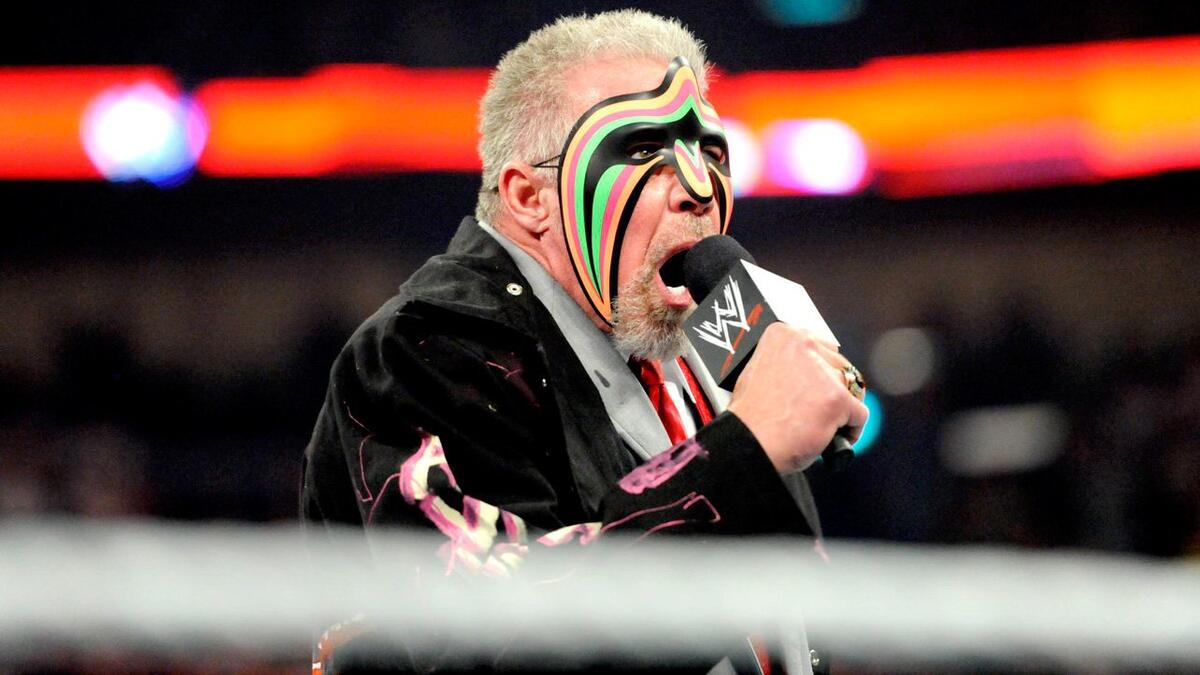
On April 7, 2014, WWE closed one of the strangest and most emotional comeback weekends the company has ever produced. Ultimate Warrior, a man who had spent years estranged from the promotion and even longer living as one of wrestling's most mythic and divisive figures, walked onto Raw in New Orleans and addressed a live WWE audience one last time.
Nobody in the building knew it would be the final public appearance of Jim Hellwig's life. That is what gives the moment its weight now. At the time, it felt like the last chapter of an old feud finally being written with a steady hand. By the next night, it felt like something else entirely.
Warrior's return had already been one of WrestleMania 30 weekend's biggest talking points. He had entered the WWE Hall of Fame two nights earlier, appeared at WrestleMania XXX, and then showed up on the post-Mania Raw, the episode that often sets the tone for the company's next creative season. That week's Wrestling Observer coverage treated the show as part of one of the most newsworthy stretches WWE had seen in years, and Warrior's presence was a major reason why.
What made April 7 stand out was not that Warrior wrestled again. He did not. It was the symbolism of the appearance. For a generation of fans, Warrior had always existed as a burst of color, speed and noise, a star built on entrance music, body language and pure force of personality as much as match craft. His run at the top in the late 1980s and early 1990s made him one of WWF's defining national stars. He was the man who beat Hulk Hogan at WrestleMania VI, the face-painted rocket who looked like he had sprinted out of a comic book and into an arena.
But his relationship with WWE had long been tangled. There had been contract fights, abrupt exits, public bitterness and years where a reconciliation looked impossible. That is part of why the April 2014 reunion hit so hard. Wrestling fans had seen too many stories like this end with one side refusing to budge. Instead, WWE and Warrior reached a point where the company could publicly celebrate him again, and he could stand in that ring without the old hostility hanging over every second.
The setting mattered too. The Raw after WrestleMania is not a nostalgia show by design. It is usually loud, restless and aimed at the future. On this night, Daniel Bryan was celebrating his WrestleMania 30 triumph. The Shield was surging. Bray Wyatt still felt dangerous. Brock Lesnar had just ended The Undertaker's streak. The company was moving into a new era in plain sight. For Warrior to appear in that environment, instead of on a safe legends special months later, made the moment feel less like an archival tribute and more like a living handoff between generations.
Warrior came out in his trademark colors, spoke directly to the crowd, and leaned into the larger-than-life image that had always defined him. Even before his death gave the segment its haunting afterlife, the speech landed because it felt sincere in a way Warrior's public persona often did not. He was not there to replay a squash match or relive one old catchphrase for cheap applause. He was there to be seen, to be heard, and to stand once more in the place that made him immortal to mainstream wrestling fans.
That alone would have made April 7, 2014 a memorable date. What happened next is why it became unforgettable. On April 8, Warrior collapsed in Scottsdale, Arizona and died at 54. Suddenly the speech was replayed not as a comeback beat, but as a farewell nobody realized they were hearing in real time.
Wrestling has an unusual relationship with memory. The industry is always preserving its past and revising it at the same time. Legends return, old grudges soften, documentaries reshape reputations, and fans argue endlessly over what a career really meant. Warrior's final Raw appearance sits at the center of that tension. It did not erase the controversies around him, and it did not need to. What it did was capture the power of wrestling myth in one concentrated burst. For one night, the character and the man were standing in the same spotlight, both older, both changed, and both still able to command an arena.
That is why the date still matters. It was not just the last time fans saw Ultimate Warrior alive on WWE television. It was the rare moment when wrestling's instinct for spectacle and its capacity for genuine feeling aligned perfectly. The comeback was real. The emotion was real. The finality, though invisible at the time, was real too.
There was another sign of WWE's changing landscape elsewhere on that same April 7 Raw. Paige made her main roster debut and defeated AJ Lee to win the Divas Championship, a surprise result that would become one of the clearest early markers of the coming shift in the women's division. That title change mattered, and in most years it could have owned the historical memory of the date by itself.
Instead, April 7, 2014 belongs first to Warrior. Not because it was a victory lap in the usual wrestling sense, and not because it tied up every loose end from his complicated career. It belongs to him because the appearance distilled everything wrestling can do when it reaches beyond wins and losses. It can restore a broken connection. It can give a crowd a moment they did not know they needed. And sometimes, with heartbreaking speed, it can turn an ordinary return into the last page of a legend's story.